
 Patient
 Doctor
 Digital Clinic
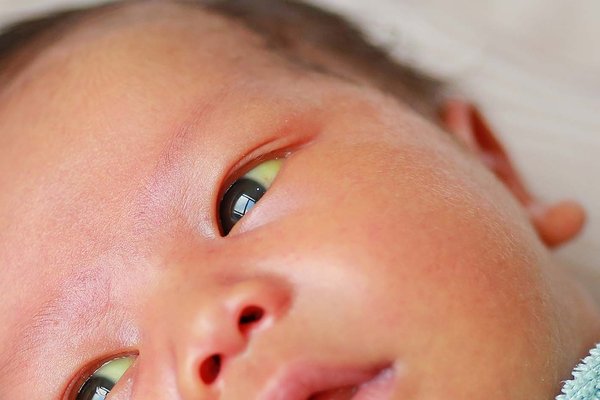
The short answer: most newborn babies turn a little yellow between day 2 and day 4 of life. This is usually harmless, is most noticeable around day 3 to 5, and fades within about two weeks. See a doctor the same day if the yellow colour appears in the first 24 hours, spreads to the legs, palms or soles, or comes with poor feeding or unusual sleepiness. Jaundice lasting beyond two weeks (three weeks in a premature baby) also needs a check, especially if stools are pale.
What is newborn jaundice?
Jaundice is the yellow colour of the skin and the whites of the eyes. It comes from bilirubin, a yellow pigment made when the body breaks down old red blood cells. Every newborn breaks down red blood cells quickly in the first days, and a baby's liver is still learning to clear bilirubin. For a few days, bilirubin builds up faster than it leaves, and the skin turns yellow.
In most babies this is a normal, short phase called physiological jaundice. In a smaller number, bilirubin rises too fast or too high, and that is when treatment matters. Very high bilirubin can affect a baby's brain, which is why doctors take jaundice seriously even though most cases are mild.
The usual pattern, day by day
| Baby's age | What is usual |
|---|---|
| First 24 hours | Yellow colour is not expected. Show the baby to a doctor the same day. |
| Day 2 to 4 | Mild yellowing often starts on the face and moves down the body. |
| Day 3 to 5 | Jaundice is usually at its most visible. |
| By 2 weeks | It has usually faded in a full-term baby (by 3 weeks in a premature baby). |
Warning signs: when to see a doctor
See a pediatrician today if:
- the yellow colour appeared within the first 24 hours of life
- the yellow has spread to the tummy, legs, palms or soles, or looks deeper each day
- your baby is feeding poorly, has fewer than 6 wet nappies a day by day 5, or is losing weight
- your baby is unusually sleepy and hard to wake for feeds
- jaundice continues beyond 2 weeks (3 weeks if born premature)
- stools are pale, chalky white or clay-coloured, or urine is dark yellow or brown
Go to the nearest hospital immediately if your baby:
- is very difficult to wake, floppy, or not feeding at all
- arches the back or neck backwards, or has a high-pitched cry
- has a fever, a very low temperature, or breathing difficulty
Babies at higher risk
Some babies are more likely to need treatment, so doctors watch them more closely:
- babies born before 38 weeks
- a different blood group from the mother (for example, mother O group or Rh-negative), which can break down red cells faster
- G6PD deficiency, an inherited enzyme condition that is fairly common in parts of India; mention any family history
- bruising or a swelling on the head from delivery
- an older brother or sister who needed phototherapy
- feeding difficulties in the first days, or weight loss of more than 10 percent of birth weight
How doctors check bilirubin
Looking at the skin is a useful first check, but it is not reliable enough to decide treatment, especially in babies with darker skin. Doctors measure bilirubin with a painless skin meter (transcutaneous bilirubin) or a small blood test.
There is no single "normal bilirubin level" for all newborns. The same number can be fine for a 4-day-old baby and need treatment in a 1-day-old. Doctors read the result against the baby's age in hours, weeks of pregnancy at birth and risk factors, using standard charts. Always share the time of birth and the time of the test with your doctor.
Treatment: what to expect
- Most babies need no treatment, only good feeding and a follow-up check.
- Phototherapy is the usual treatment when bilirubin is high. The baby lies under a special blue light with the eyes covered. The light helps the body change bilirubin into a form it can pass out. Feeding continues, and most babies need it for one to two days.
- Exchange transfusion or medicine into a vein is needed only rarely, when bilirubin is very high or rising fast despite phototherapy.
- Sunlight is not a treatment. Putting a baby in direct sun is not reliable and risks sunburn and overheating.
Breastfeeding and jaundice
Breastfeeding is good for babies with jaundice, and in most cases you should continue it.
- In the first week, jaundice can be worse when a baby is not yet getting enough milk. Feed 8 to 12 times in 24 hours and ask for help with latch early; a lactation consultant can help on a video call. Do not give water or glucose water; they do not lower bilirubin.
- After the first week, some healthy, well-feeding breastfed babies stay mildly yellow for several weeks. This is called breast milk jaundice and is usually harmless, but a baby who is still yellow after 2 weeks should still have a check to rule out other causes.
Caring for a jaundiced baby at home
- Check the colour in daylight: gently press the skin on the nose or chest and see whether it looks yellow as it blanches.
- Feed on demand, at least 8 to 12 times a day, and wake a sleepy baby for feeds.
- Count nappies: by day 5, expect at least 6 wet nappies and yellow stools each day.
- Keep every follow-up appointment. Babies sent home within 72 hours of birth should usually be checked again within 1 to 2 days.
- Avoid home remedies, herbal drops and sunlight exposure, and do not stop breastfeeding unless your doctor advises it.
Jaundice beyond two weeks and pale stools
Jaundice that lasts more than 2 weeks in a term baby (3 weeks in a premature baby) is called prolonged jaundice. It is often harmless, but it needs a blood test that separates two types of bilirubin. Pale, chalky or white stools, or dark urine that stains the nappy, can point to a blocked bile duct (biliary atresia). This needs urgent specialist care, because surgery works best when it is done in the first weeks of life. Take a photo of the stool to show the doctor.
Can a video consultation help with newborn jaundice?
Yes, for many questions, as long as warning signs are not present. On a video consultation, a pediatrician can:
- review bilirubin reports against your baby's age in hours and decide whether a repeat test is needed
- assess feeding, nappies, weight and skin and stool colour on camera in good daylight
- guide you through breastfeeding problems that make jaundice worse
- explain a phototherapy decision or give a second opinion, which many families living away from their parents find reassuring
- follow up prolonged jaundice and its test results
A video call cannot measure bilirubin. If your baby has any of the emergency signs above, go to a hospital first. You can see all our newborn and child specialists on the Pediatrics & Neonatology page.
Frequently asked questions
Is jaundice in a newborn dangerous?
Usually not. Most newborn jaundice is mild and fades on its own. It becomes dangerous only when bilirubin rises very high, which is why early checks and timely treatment matter.
How long does newborn jaundice last?
In most full-term babies it fades within about 2 weeks; in premature babies, within about 3 weeks. Breastfed babies can stay mildly yellow longer, but they still need a check after 2 weeks.
Should I put my baby in sunlight for jaundice?
No. Sunlight is not a reliable treatment and can cause sunburn or overheating. If treatment is needed, doctors use phototherapy.
Should I stop breastfeeding if my baby has jaundice?
In almost all cases, no. Frequent breastfeeding helps clear bilirubin. Stop or pause only if your pediatrician specifically advises it.
What bilirubin level is dangerous for a newborn?
There is no single number. The safe range depends on the baby's age in hours, weeks of pregnancy at birth and risk factors, so a doctor must read the result on an age-based chart.
Can jaundice come back after phototherapy?
Bilirubin can rise again slightly after phototherapy stops, so doctors often repeat the test within a day or two. A small rise is common and usually needs no further treatment.
About the author
Dr. Raju Vannala is a pediatrician and neonatologist at VRA Health. He trained in pediatrics at PGIMER Chandigarh, with neonatal intensive care training in the UK (NNICU) and a PGPN from the USA. He cares for newborns and children, with a special interest in newborn care, vaccinations, infections, asthma, growth and nutrition. Book a video consultation with Dr. Raju Vannala.
This article is for general information and does not replace a consultation with a doctor who can examine your baby. In an emergency, go to the nearest hospital.
